Content:
- Research Concept
- Background
- Chapter 1: Strategy I — The Archival Subversion (Case Study: Sammy Baloji, Michèle Magema).
- Chapter 2: Strategy II– The Institution as Readymade (Case Study: Meschac Gaba, Yinka Shonibare CBE RA, Roméo Mivekannin, Kendell Geers).
- Chapter 3: Strategy III–Infrastructural Disobedience (Case Study: Núcleo de Arte, Ibrahim Mahama, Vusumzi Nkomo)
- Conclusion
- List of image sources & bibliography
Research Concept
This visual research looks at how contemporary African artists have engaged in institutional criticism which involves questioning the power dynamics, exclusion methods and underlying beliefs of art institutions. While institutional critique started as a clear artistic approach in Western countries during the 1960s and 1970s, its path in African contemporary art has been different. This difference comes from the effects of colonialism, the efforts of new nations after independence, and the unequal global art systems. The research suggests that African artists have created their own ways to challenge institutional authority and offer new models for how culture is made and recognized. It begins with the idea that, in African contemporary art, institution isn’t just one fixed thing but a contested field. This includes colonial museums, national galleries after independence, international biennales, and even the art market. The research argues African artists have shaped a unique two-part development of institutional criticism that moves away from Western-centered stories. Instead of just copying the bold strategies of 1970s European and American artists like Hans Haacke, African artists have worked on reshaping institutions from within, adding their own voices and perspectives.
The artworks are the focus here, not just something in the background. By looking at key works, installations, and archival projects, the study analyzes how artists use space, materials, and historical sources to build their critiques. The researcher acts as a guide, letting the artworks speak for themselves. The artworks use archives, dust, or reenact colonial photography to explain the power structures artists aim to challenge. This approach keeps the study focused on the experience rather than imposing outside theories. The study’s framework identifies a wave of institutional criticism from the 1960s to the 1990s. This period is described as critique from within. After independence artists often were the first in their countries to face museums. These museums were seen as leftovers from times. The artist’s method was to work inside these inherited institutions. They did this to reveal and question the underlying ideas of these institutions.
This topic was chosen because «institutional critique» is a known concept in Euro-American art history. However, it often overlooks the historical and political situations African artists face. These situations include the legacy of museums. They also include nationalism after independence and the unequal global art system. As a result, it misses how African artists see institutions. African artists see institutions not as power centers but also as materials. They can work with these materials visually and conceptually. The artworks and African artists are key to understanding this. The African artists and their artworks provide a perspective; they show how institutions can be challenged.
This research asks: What unique visual strategies have African contemporary artists developed to critique artistic and cultural institutions, and how are these different from traditional Western institutional critique? The idea is that African artists have followed two main paths an earlier set of work aimed at subverting archives and reclaiming colonial institutions, and a later set that uses infiltration, repair, and breaking down infrastructure. Through these methods, they turn institutional critique from mostly a negative, revealing act into a creative process of repair, building counter-archives, and creating new types of institutions grounded in post-independence and decolonial experiences. The material selection of the visual research was based on the institutional reports, case studies, as well as publications from the past decade featuring the history of Institutional Criticism.
Background
Institutional criticism; art that questions the structures, ideas, and power behind museums, galleries, biennials, and the larger art world has mostly been understood through a Western lens. Think of Hans Haacke’s 1970s work revealing corporate influence or Andrea Fraser’s performances showing museums as class-based institutions. In these cases, the focus is usually on Western art museums and commercial galleries. But looking from Africa changes the picture. The institutions involved and the ways artists respond to them come from very different histories, needs, and artistic methods.
«Hans Haacke showing slums and naming slumlords in „Shapolsky et al Manhattan Real Estate Holdings, A Real Time Social System as of May 1, 1971“ (1971) (segment)» Ognjen Simic, November 11, 2019.
African institutional criticism starts with the colonial period. In the late 1800s and early 1900s, European colonizers took African cultural objects like masks, sculptures, and royal items, moving them to ethnographic museums in Paris, London, Brussels, and Berlin. Inside Africa, colonial governments set up museums that aimed to control and classify African cultures as something fixed, primitive, and separate from «fine art.» These museums weren’t neutral; they were part of the colonial system’s agenda. So, for African artists after independence, museums were not just places that excluded them, they were reminders of ongoing cultural harm.
«The interior of Oba’s palace during the punitive expedition, with the looted Benin bronzes in the foreground, 1897.”Sarah Van Beurden, March, 2022.
The first generation of artists after independence (1960s–1990s) faced a tough situation. The old colonial museums kept their old ways of representing Africa, while new national museums often pushed official cultural messages, leaving little room for critical or experimental work. Artists started to develop forms of institutional criticism here. Some engaged with archives by re-photographing and re-framing colonial images to show what was left out. For example, Sammy Baloji uses digital collages to layer colonial postcards over today’s industrial sites, revealing how exploitative systems persist. Others used performance or public acts to question state authority, or borrowed European portrait styles to honor spaces ignored by apartheid, like Zwelethu Mthethwa’s photos of township interiors. This early wave often worked inside the institutions’ own materials archives, displays, buildings to critique while reclaiming control. A second generation of artists, starting in the late 1990s and continuing today, works in a global art world that seems more open but still holds many power imbalances. African biennials in cities like Dakar, Bamako, and Lagos, along with visibility in Venice and Western museums, created new spaces for critique.
Artists treat museum displays as colonial objects that can be «repaired, ” while groups like Mozambique’s Núcleo de Arte avoid formal institutions by creating temporary, community-based projects after civil war. Instead of direct confrontation, these artists focus on working within or around institutions to redirect their role. They don’t just point out bias; they suggest new ways to care, remember collectively, and heal historically, often using tools like archives, exhibitions, and biennials in unexpected ways. What sets African institutional criticism apart from Western models is its creative and forward-looking approach. Where Western critique often aims to reveal the art system’s politics and economics, African artists use it to restore history mending the breaks colonial museums caused, building new archives, and imagining institutions based on community rather than state or market interests. Their methods are very visual: using diptychs to compare histories, showing dust and decay to signal neglect, re-staging colonial photos, or turning galleries into rituals for repair.
These are distinct ways to express critique through visual means. In this way, institutional criticism in African contemporary art isn’t just a copy of Western ideas. It is its own historical line, born from colonial museums’ material and emotional damage, the struggles of new nations, and the uneven global art scene. African artists see institutions as places of harm but also as places that can be fixed. They have shifted institutional criticism from just exposing problems to rebuilding visually, through archives, and with new infrastructures.
Chapter 1: Strategy I — The Archival Subversion (Case Study: Sammy Baloji, Michèle Magema)
This chapter helps us think through different historical ideas. It examines how editing a photograph can make us question what the original picture truly represents. The visual evidence shows that the old colonial thinking about taking things and putting them into categories is still present in how countries are set up politically and economically, even after they’ve become independent. This isn’t just about breaking down old symbols; it’s a more involved way of writing new meanings into the record. The artists don’t just get rid of the colonial archives; they actually go into them, both physically and digitally. They do this to show what was left out and the lasting real-world impacts of those omissions. The whole point of their criticism is built right into how they place things next to each other.
Sammy Baloji
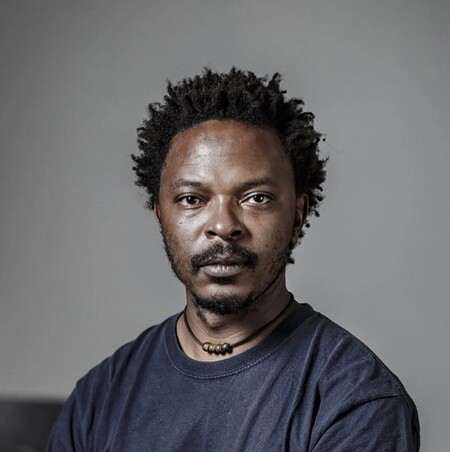
Sammy Baloji, who lives and works between Lubumbashi and Brussels, was born in Lubumbashi, Democratic Republic of the Congo, in 1978. Sammy began his doctoral studies at Sint Lucas Antwerpen in September 2019 as part of an artistic research project titled «Contemporary Kasala and Lukasa: towards a Reconfiguration of Identity and Geopolitics.» Sammy Baloji has been investigating the history and memory of the Democratic Republic of the Congo since 2005. In addition to addressing the effects of Belgian colonization, his work is an ongoing investigation into the Katanga region’s cultural, architectural, and industrial legacy.
Mémoire, 2006. Sammy Baloji.
Sammy Baloji confronts institutions through a technique he refers to as archival subversion. He directly engages with the archives of Western ethnographic museums to challenge their authority and the narratives they present regarding history. As an artist who also takes on the role of a historian or researcher, Baloji centers his work on critically reinterpreting documents and images from the colonial era. He achieves this by undertaking residencies at locations such as the Africa Museum in Tervuren and the Rietberg Museum in Zurich, producing works that challenge the prevailing perspectives on Africa’s history. His work also brings up significant ethical issues regarding museums and the power dynamics that support them, urging institutions to consider ways to decolonize themselves. By using the museums' collections against themselves, Baloji transforms these locations from impartial storage areas into forums for discussion, uncovering the colonial violence that exists beneath the surface.
Memoire, Katanga, Congo (DRC), Sammy Baloji, 2006.
Baloji’s series Memoire (2004-2006) is a foundational example, consisting of twenty-nine digital photomontages that superimpose black-and-white archival images from the early twentieth century onto his own contemporary color photographs of the same locations in the Katanga mining region. The stark contrast between the black-and-white past and the color present, often with archival figures superimposed onto ruined industrial landscapes, visually forces a «collapse between the colonial past and postcolonial decline,» creating a startling juxtaposition that reveals historical continuity and subverts simplistic readings of history.
Memoire, Katanga, Congo (DRC), Sammy Baloji, 2006.
Similarly, in his exhibition Congo Far West (2011) at the AfricaMuseum, Baloji investigated the museum’s collections of expedition photographs to question how these visual records were used to construct colonial mythologies. By revisiting and re-contextualizing these archives, Baloji challenges the legitimacy of the ethnographic collection itself, asking whether museums can legitimately undertake scientific analysis of objects rooted in a violent history of extraction.
Sammy Baloji, Kasala: The Slaughterhouse of Dreams or the First Human, Bende’s Error, 2020.
Another key example is his 2020 installation Kasala: The Slaughterhouse of Dreams or the First Human, Bende’s Error, created from a residency at the Rietberg Museum. Here, Baloji critically engages with the photographic archive of German ethnologist Hans Himmelheber from a 1938/39 trip to the Congo. In this installation, Baloji «overwrites» the colonial archive by developing new methodologies based on local Luba cultural practices of oral history and performative poetry, thereby introducing «missing voices» and alternative meanings to counter the colonial narrative. Through these acts of subversion, Baloji demonstrates that archival subversion is a powerful tool to critique how institutions continue to grapple with colonial legacies.
Michèle Magema
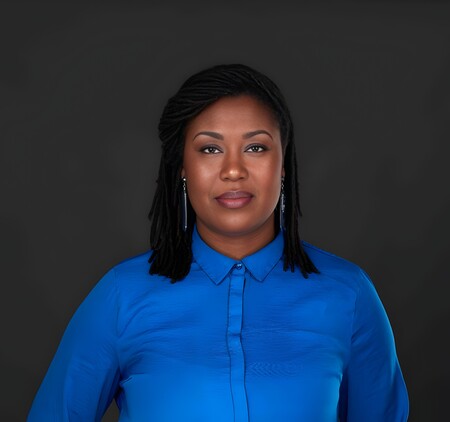
Another important African artist who challenges institutions by looking at old records differently is Michèle Magema. She’s a multimedia artist, originally from Congo but now living in Paris. Two of her main pieces, «Under the Landscape» (2015) and «Evolve» (2019), really show how she does this.
Michèle Magema, 2015; «Under the Landscape»
In «Under the Landscape,» Magema criticizes the arbitrary national borders of the Democratic Republic of the Congo, which were drawn by colonial powers. She carves these borders into 81 blocks of soft rubber tree wood. This wood is significant because it’s directly tied to the brutal exploitation that happened in the Congo Free State. Afterward, she rearranges these blocks into what she calls a «new border landscape,» basically taking apart and putting back together a colonial map. This act reveals how those borders were artificial and oppressive.
Michèle Magema, Evolve, 2019, Mixed media installation: Two photographs and twenty-six ink drawings, commissioned by Museum Rietberg Zurich
Similarly, her piece «Evolve» questions the colonial archives. She does this by taking photographs that German anthropologist Hans Himmelheber snapped during his 1938/39 trip to the Belgian Congo and putting them in a new context. Magema picks out pictures showing things like Himmelheber’s car, a piece of art he bought, and other colonial scenes, then traces over them with fine ink strokes. She then places these alongside photos of «historic architecture, empty villages, and seemingly untouched nature.» This deliberate combination challenges the old way of thinking that colonial records often push, which sharply divides «tradition» and «modernity.» She even creates a symbolic meeting between Himmelheber and her own grandfather, who actually benefited from the colonial administration. This makes the simple story of victims and perpetrators more complex, highlighting how some Congolese people also gained from the system in complicated ways.
By physically altering and rethinking these old records whether by carving, rearranging, or putting them into new contexts Magema questions the power structures built into archives and how they’re organized. She changes an archive from just a static storage place for colonial information into an active tool. She uses it to create «new archival topographies» and to perform a «ritual of reparation» for a «mutilated, forgotten, secret colonial history.» In short, her work is a powerful critique of institutions, directly challenging the authority and stories told by colonial-era museums and archives.
Chapter 2: Strategy II — The Institution as Readymade (Case Study: Yinka Shonibare CBE RA, Meschac Gaba, Roméo Mivekannin, Kendell Geers)
In this chapter, the analysis focuses on the formal concept of repair: The careful arrangement of objects to highlight their shared histories of violence, extraction, and classification. The gallery space itself is treated as a readymade colonial structure.
Yinka Shonibare
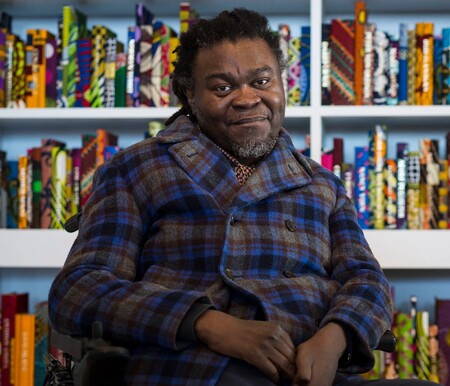
Yinka Shonibare CBE, who was born in 1962, is a famous British-Nigerian artist who works across many different types of art. His pieces often explore cultural identity, the history of colonialism, and what happens after it, all within our globalized world. He’s most recognized for using bright «African» Dutch wax fabric on mannequins that are styled like they’re from the Victorian era, often without heads. Through these works, he delves into complicated stories about economic and racial history.
Scramble for Africa, Installation view, Yinka Shonibare MBE, Museum of Contemporary Art, Sydney, Australia, September 24, 2008–February 1, 2009.
Yinka Shonibare criticizes institutions by using different artworks to question how museums, public monuments, and even art history itself get their authority. For instance, his piece Scramble for Africa (2003) shows the 1884 Berlin Conference, where European countries split up the continent, as a banquet with headless, «mindless» figures. He uses his distinctive Dutch wax-print fabric for the 14 mannequins in the scene. This fabric, which actually came from Indonesian batik and was made in Europe, challenges the idea that it’s purely «African.» Through this, Shonibare doesn’t just criticize the brutality of colonialism; he also reveals that cultural and national identities, which institutions often show as solid and real, are actually made up and not truly authentic.
Nelson’s Ship in a Bottle displayed on the Fourth Plinth in Trafalgar Square, London (2010).
He continues this criticism with his public artwork Nelson’s Ship in a Bottle (2010), displayed on the Fourth Plinth in London’s Trafalgar Square. The sculpture looks like Admiral Nelson’s HMS Victory, a famous symbol of British naval strength during the empire. But Shonibare’s version is inside a huge glass bottle, and its sails are made from his well-known Dutch wax-print fabric. Putting it in a bottle and changing its «skin» basically makes a grand symbol of the empire small and less powerful. At the same time, the fabric’s history, tied to colonial trade, celebrates London’s diverse, postcolonial identity, pushing back against the square’s story of imperial triumph.
Yinka Shonibare The Swing (after Fragonard) (2001).
Shonibare challenges what’s considered «standard» in art history, like in his piece The Swing (after Fragonard) (2001). This is a 3D version of the well-known Rococo painting. The original painting perfectly shows the wasteful luxury of French aristocrats. But Shonibare’s version replaces the woman’s head with an empty space a clear hint at the guillotine and makes her fancy dress from his symbolic Dutch wax fabric. By doing this, he questions the core ideas of «high art» and European taste, showing how cultural rankings are deeply connected to a past of unfairness and brutality.
Yinka Shonibare, The American Library (2018).
This criticism of institutions also reaches into the places where knowledge is made, as we see in The American Library (2018). This large installation features 6,000 books wrapped in Dutch wax fabric. Many of these books carry the names of immigrants and their descendants who have helped shape U.S. culture. Shonibare made it as a direct response to anti-immigration talk. By putting this lively, world-aware alternative story inside the revered, official space of a museum gallery, Shonibare flips the usual idea of a library. Instead of just holding one-sided national stories, he turns it into a celebration of different cultures and a stand against fear of foreigners.
Meschac Gaba
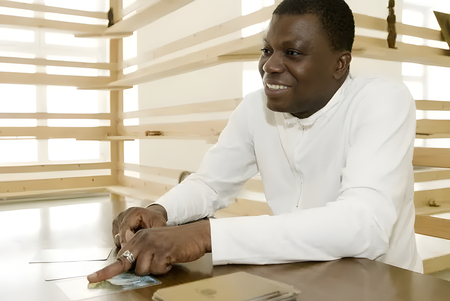
Meschac Gaba is a conceptual artist from Cotonou, Benin, who was born in 1961. He is renowned for utilizing commonplace items in installations that contrast concepts of identity and culture. He was an artist-in-residence at the Rijksakademie van Beeldende Kunsten in Amsterdam in 1996 and 1997, where he worked on his project, the Museum of Contemporary Art, which is made up of several rooms that resemble actual museums.
Architecture Room From Museum of Contemporary African Art 1997–2002, Meschac Gaba.
Meschac Gaba critiques art institutions by inventing imaginary, traveling institutions that highlight and challenge the deep power issues in the Western art scene. His biggest work, the Museum of Contemporary African Art (1997-2002), is a large setup, about the size of a room. It really points out problems while also suggesting an ideal way things could be. He came up with this idea because there weren’t many places showing modern African art. The project directly asks why African artists are often missing from Western museums, pushed instead into displays of «traditional» old items. By building a «museum without walls» that pops up in various places, Gaba is criticizing the old, Europe-focused way museums are set up, which comes from colonial times. Inside its twelve parts, the Museum flips the usual museum visit on its head. For instance, in its «Architecture Room,» people can design their own museum buildings. This turns visitors from just looking into actively participating, and it makes you think about who really gets to make decisions in big institutions.
Exchange Market, 2014; Meschac Gaba.
The «Museum Shop» and «Humanist Space» parts of the work also break down how buying and selling, and how communities, fit into art institutions. His criticism isn’t just about museums; it also touches on bigger issues of money and unfairness around the world. For his 2014 installation, called Exchange Market, Gaba set up a pretend marketplace with ten tables. On them, he showed African money that had lost value next to Western cash. This was a strong way to show the unfairness in work and earnings.
Flatiron Building (Wig Building) from 2008, Meschac Gaba.
Another piece, his Flatiron Building (Wig Building) from 2008, is a sculpture of that famous New York building covered in fake braided hair. This work questions what we consider «cultural value» by mixing powerful Western architecture with something linked to African culture, challenging old ideas about what’s important. So, with all these different approaches, Gaba’s criticism of institutions isn’t just about tearing down old ways. He’s actually building new, more open models for how we can make and share art and culture.
Roméo Mivekannin
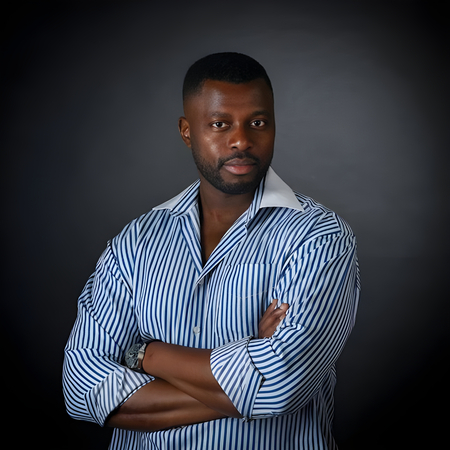
Roméo Mivekannin, a well-known Beninese multidisciplinary artist, was born in Bouaké, Ivory Coast, in 1986. His paintings, sculptures, and installations challenge colonial narratives and Western art history. In order to recover agency for oppressed persons, he is especially well-known for his «visual irritation» technique, which involves reinterpreting famous European artworks and colonial pictures by substituting his own self-portrait for the protagonists' faces.
Roméo mivekannin reinterprets colonial architecture with hand-welded sculptures at art basel, Installation; Atlas, 2025.
Roméo Mivekannin’s art really hits hard at art institutions, directly questioning the old stories that form the basis of European art history and how museums work. His pieces consistently show the violence of colonialism and the wiping out of cultures that many Western institutions were built on. You can really see this criticism in his big installation called Atlas. It’s made up of tiny metal models of ethnographic museums, hanging from the ceiling like bird cages. When Mivekannin shrinks these grand places and puts them in cages, he flips the usual power dynamic. Now, the person looking down at the institution makes it lose its authority and become something to be examined. The cage itself is a harsh way to show how these museums have treated non-Western cultures over time, basically putting artifacts and even human remains on display like strange specimens in «human zoos.» This really shows the colonial thinking behind their collections.
Mivekannin, Les gens ne disent presque rien (2025-26).
Mivekannin doesn’t just critique institutions in colonial contexts. In his solo show, Les gens ne dissent presque rien (2025-26), at the Kunsthalle Giessen, he looked at how art got tangled up with fascism. The exhibition includes a walk-in cage that looks like Adolf Hitler’s never-built «Führermuseum» in Linz. Inside, he shows portraits of artists from the Nazi era, including both victims and those who supported the regime. This powerful setup questions how institutions might try to gloss over or use history for their own purposes, making you wonder if museums are truly honest places for looking back at history. Through all these different approaches caging museums, putting himself into famous artworks, and bringing to life the unbuilt monuments of tyranny Mivekannin is doing something like a healing ritual. He uses things like old bedsheets soaked in Vodun elixirs, and his works become ways to clean out bad energy. He turns criticizing institutions into a really spiritual way to reclaim memory and identity.
Kendell Geers
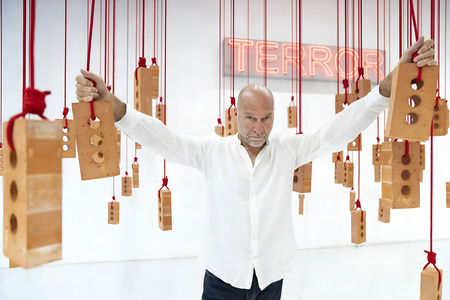
Kendell Geers is a prominent South African conceptual artist known for his provocative, politically charged work that challenges social norms, power structures, and the art world itself. He grew up in a working-class Afrikaans family during the height of Apartheid. Discovering his education was built on racist lies, he fled South Africa at 15 to live in exile as a political refugee. In a symbolic act of «giving birth to himself» as an artist, he officially changed his birth date to May 1968 a year synonymous with global student revolutions and civil upheaval.
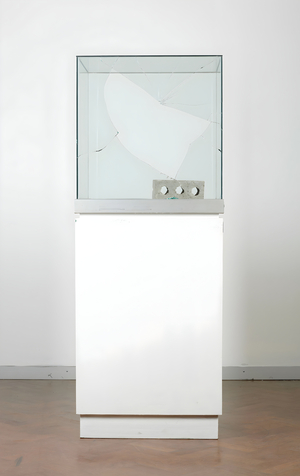
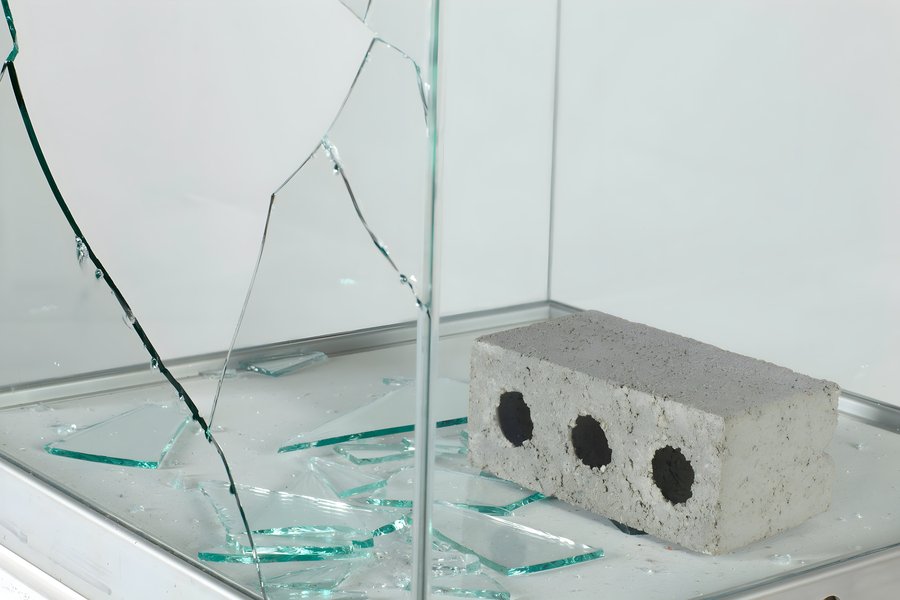
Kendell Geers, Title Withheld (Vitrine) (1993). Performance, vitrine, brick, debris. Artwork courtesy of the artist. Sebastian Voigt.
Kendell Geers’s art is a kind of «institutional criticism.» He doesn’t just do this from within the art world, but by actually taking on and dismantling its physical and mental frameworks. Instead of just showing power, he makes people really feel it deep down. You can see this most clearly in the early 1990s, when he directly attacked museums themselves. He would «explode the railings of several,» leaving only holes in walls and piles of rubble. This was a pretty extreme attack on how sacred we view gallery spaces. You see this same aggressive questioning in his 1993 piece, «Title Withheld (Vitrine).» It’s just a broken glass museum display case with a brick inside, looking like it was thrown in. Here, Geers takes over the classic museum vitrine. This kind of case was often used to display African ritual masks as strange, exotic items. By breaking it, he violently frees the object and smashes that old colonial way of showing things.
Kendell Geers. Self Portrait, 1995
His 1995 piece, «Self Portrait,» continues this critique of colonial history and identity. It’s just the broken-off neck of a green Heineken beer bottle a nasty barroom weapon with a label that says «IMPORTED FROM HOLLAND.» Coming from a white South African whose ancestors were Dutch colonizers, this simple object really brings together the harsh connection between violence and Afrikaner identity. It boils his own family history down to just a broken weapon.
«Twilight of the Idols» Kendell Geers, 2009.
Geers’s criticism of institutions also deeply questions how Western art history has consistently turned African objects into fetishes and commercial goods. His ongoing series, «Mutus Liber» (which means «Mute Book») and «Twilight of the Idols,» directly tackle this. He does it by taking mass-produced nkisi nkondi figures from the Kongo people. Then he hides these objects, either by painting them or wrapping them with red and white chevron tape, which is like crime scene tape in South Africa. This way, he signals danger and acts like a shield, making clear the colonial «crime» that turned African ritual objects into exotic art and tourist trinkets. This act of wrapping and hiding is a direct way to show the colonial violence of labeling and silencing things.
Exhibition view, ‘Flesh Of The Spirit’ with (front) ‘Leviathan Stool’, 2014; (wall) ‘Flesh of the Spirit 8231’, 2021 COURTESY: Kendell Geers & Carpenters Workshop Gallery.
Going even further, his series «Flesh of the Spirit» takes 3D scans of old and rare African artworks and turns them into bronze sculptures. When he puts these technically made copies next to the real tribal pieces, Geers directly asks if a copy can really have the same power and spiritual glow as the original. He’s trying to break down the Western obsession with «authenticity» and originality that has shaped the African art market for a long time.
Kendell Geers, Αkropolis Redux (The Director’s Cut) 2004.
This idea of taking things apart, whether we’re talking about actual objects or just concepts, also applies to museums. Think about it: museums are the places that tell us our national and historical stories. For instance, in 2004, a museum in Athens asked him to make a piece called 'Akropolis Redux (The Director’s Cut).' What he did was rebuild the Parthenon. But instead of those classic marble columns, he used rolls of barbed wire, stacked high on steel shelves. This massive artwork really brings to mind a world full of danger and violence. It links how Athens first brought us democracy with the destruction modern powers cause, often saying they’re doing it for freedom. The artwork takes a well-known Western symbol of great accomplishment and transforms it into something that looks like a scary, military storage area.
In 1996, he created «Unplugged.» This project really made people think about the usual way art shows were organized. His aim was to make it fair and open, letting artists, not the curator, decide everything. Then, in 1997, his performance called «Guilty» pushed things even more. He actually took over a right -wing nationalist celebration in Pretoria and made it part of his art. This act of protest and vandalism led to death threats, which really showed how deep and painful South Africa’s colonial past still felt. Whether he’s throwing a brick through a gallery window, putting up an electric fence to block off an area, or sticking a fake bomb warning on a gallery wall, Geers’s art always questions how powerful institutions operate. He often puts himself and the safety of the viewers right in the thick of it, making them the central point where these clashes happen.
Chapter 3: Strategy III–Infrastructural Disobedience (Case Study: Núcleo de Arte; Cristóvão Canhavato (Kester), Ibrahim Mahama).
African artists frequently use a tactic known as «infrastructural disobedience» to critique institutions. By creating, altering, or reconsidering the fundamental conceptual and physical frameworks upon which these institutions rely, they resist current power structures. The Núcleo de Arte, Mozambique’s oldest artist group, started in 1936 really challenge institutions by directly going after the harmful power of war and the lasting effects of colonialism. You can see this criticism most clearly in their «Transforming Arms into Tools» (TAAT) project, where they collect old guns that aren’t used anymore and turn them into art.
Cristóvão Canhavato (Kester)
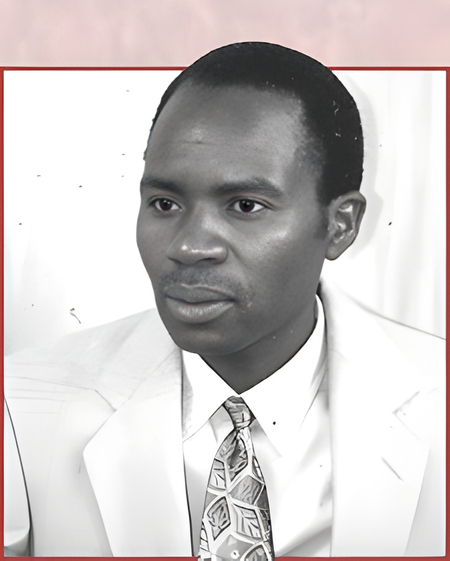
Born in Zavala in 1966, Cristóvão Canhavato (Kester) is a well-known sculptor from Mozambique. His most well-known creations are the Throne of Weapons and the Tree of Life; two potent pieces of art made from decommissioned weapons from the Mozambican Civil War.
Cristóvão canhavato (Kester), «Throne of weapons in 2002».
The artists in the group made the «Throne of weapons in 2002» headed by Cristóvão Canhavato (also known as Kester) from old weapons like portuguese rifles and ak-47s. The chair has a gothic shape, meant to look like a church. The materials it’s made from weapons used in Mozambique’s civil war directly speak to the violence and pain that conflict caused, even affecting the artist’s own family. By turning these symbols of death into something useful, the artwork questions the systems that allow wars to happen, and also the art market, which can sometimes treat such objects in a strange, almost worshipful way. This message becomes even stronger when a big place like the British museum buys it; the museum even called the throne its «most eloquent object.» This puts a powerful anti-war statement right into a collection that was largely built during times of colonial rule.
The tree of life (2004) By Cristovao Canhavato (Kester), Hilario Nhatugueja, Fiel dos Santos and Adelino Serafim Mate.
The British museum also commissioned another big sculpture called «The tree of life (2004)». Four artists from Núcleo de arte made it using over 6,000 old weapons that were no longer in use. It’s about 3.65 meters tall, and it transforms pistols, grenade launchers, and ak-47s into a symbol of new beginnings and coming together. Placing this artwork in a European museum, a piece that literally changes tools of violence and reminders of colonialism (since many of those rifles came from Portugal) into a sign of peace, really makes a strong point. It forces the museum to become a stage for a post-colonial story, using its own space to share a message of healing and getting rid of weapons, especially when thinking about the violence often tied to Europe’s colonial past.
Ibrahim Mahama
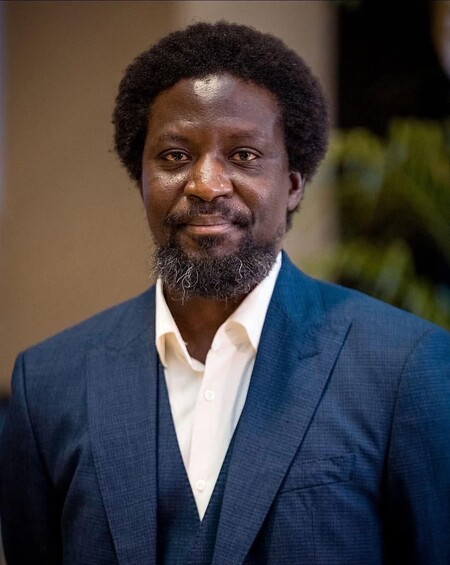
Renowned Ghanaian visual artist Ibrahim Mahama was born in 1987 and is based in Accra, Kumasi, and Tamale. He is well-known for his large-scale works that explore themes of commodities, migration, and post-colonial history utilizing jute sacks, rubble, and abandoned materials. In December 2025, ArtReview rated him the most influential person in the art world.
«Installation view Ibrahim Mahama: Zilijifa, The Physical Impossibility of Debt in the Mind of Something Living, 2025; Go Tell it on the Mountain, 2025, Kunsthalle Wien 2025 Courtesy Redclay; Ibrahim
The Ghanaian artist Ibrahim Mahama is another great example. He often uses leftover pieces of old colonial buildings and post-colonial structures in his art to criticize how resources were taken and how people were made to work. In his piece called Zilijifa (from 2025), he took a whole diesel train, removed its engine and inside parts, and made it empty. Then, he propped it up on pillars built from thousands of old, dented head pans. These are the bowls Ghanaian women historically used to carry heavy things on their heads. By taking apart this symbol of British colonial railways and resource extraction, and turning it into a monument held up by tools used for everyday work, Mahama is doing that «infrastructural disobedience» thing. He makes people really see the physical harm and money-related unfairness built into these systems. This kind of approach is similar to «epistemic disobedience,» which you can see in how independent art spaces are made all over Africa, like the Nafasi Art Space in Dar es Salaam. These «off spaces» push back against the usual way of doing things by building different kinds of structures through creative ways of saying «no» and rethinking things. Take the Nafasi Academy, for example; they built it out of old shipping containers. This essentially created an alternative art school completely separate from typical institutions.
Conclusion
This research shows us that when African contemporary art critiques institutions, it’s not just copying what western art has done. Instead, it’s a unique practice, deeply rooted in real materials and big ideas, that turns criticism from something purely negative into something that builds, fixes, and creates new worlds. We saw this happen in two main ways. First, artists tackled the colonial museum and the post-independence government systems. They did this by messing with archives, like Sammy Baloji did with his layered works, and by challenging how things were presented. Then, the approach changed to more about getting inside institutions and subtly disobeying their rules. This included using existing institutional forms in new ways like núcleo de arte’s art projects in urban spaces. Throughout all of this, African artists consistently refused to simply choose between destroying inherited institutional structures or just giving in to them.
Instead, as our research helped us see through a close look at their art forms, these artists treat the institution almost like a living material. They go into it, add layers to it, mend it, perform around it, or even build things next to it. By doing this, they broaden what «institutional critique» even means. It’s no longer just about showing how power works; it’s about suggesting new ways for things to be displayed, remembered, and for social spaces to exist. What we end up with is a really distinct way of thinking about art from a postcolonial and decolonial perspective. It’s a viewpoint where the archive isn’t thrown away but rewritten, where the museum isn’t left empty but taken over in new ways, and where not getting recognized by traditional institutions actually becomes the reason to invent new, often hidden, ways for people to feel like they belong. So African contemporary art isn’t just criticizing institutions; it’s reimagining what an institution could be once it’s freed from the burdens of colonial exploitation and show demands of modern consumerism. It doesn’t offer one single answer, but rather a collection of visual strategies that are still incredibly important for anyone looking to change institutions in the future.
List of Image sources & Bibliography
Abudu, K. J. (2025) 'Disinheriting the Violence of Colonial Modernity: Art, Exhibition-Making, and Infra/Intra-Structural Critique, e-flux Journal, (152). (Accessed: 05 April 2026).
Bouwhuis, J. and seid’ou, k. (2014) 'Silent Parodies: kąrî'kachä seid’ou in conversation with Jelle Bouwhuis', Project 1975 and the post-colonial unconscious (Accessed: 05 April 2026).
Cockerill, K. (2019) 'The Main Complaint: Zeitz MOCAA / Cape Town', Flash Art, 11 March (Accessed: 07 April 2026).
Kennedy, S. (2024) 'Unsettling the Archive: Clara Etso Ugbodaga-Ngu and the Danford Collection', Third Text, 38(1-2), pp. 228-244. (Accessed: 08 April 2026).
Raunig, G. and Ray, G. (eds.) (2009) Art and Contemporary Critical Practice: Reinventing Institutional Critique. London: Mayfly. (Accessed: 19 April 2026).
Thomas, A. M., Grosse, J. and Mutumba, Y. (2020) 'ON DECOLONIAL ART CRITICISM: Alexandra M. Thomas in Conversation with Julia Grosse and Yvette Mutumba', Texte zur Kunst. (Accessed: 19 April 2026).
Nervi, L. (2025) Pedagogy and Artistic Practice: Ibrahim Mahama’s Decolonial Spaces. Master’s thesis. Università Ca' Foscari Venezia (Accessed: 20 April 2026).
https://www.artsy.net/artwork/sammy-baloji-kasala-the-slaughterhouse-of-dreams-or-the-first-human-bendes-error (06-04-2026)
https://eavm.uqam.ca/babillard/bienvenue-a-michele-magema-nouvelle-professeure-de-leavm/(11/04/2026)
https://www.claescontemporary.com/artist-kendell-geers -(15/04/2026)
https://collection.emst.gr/en/projects/%CE%97-( 16/04/2026)